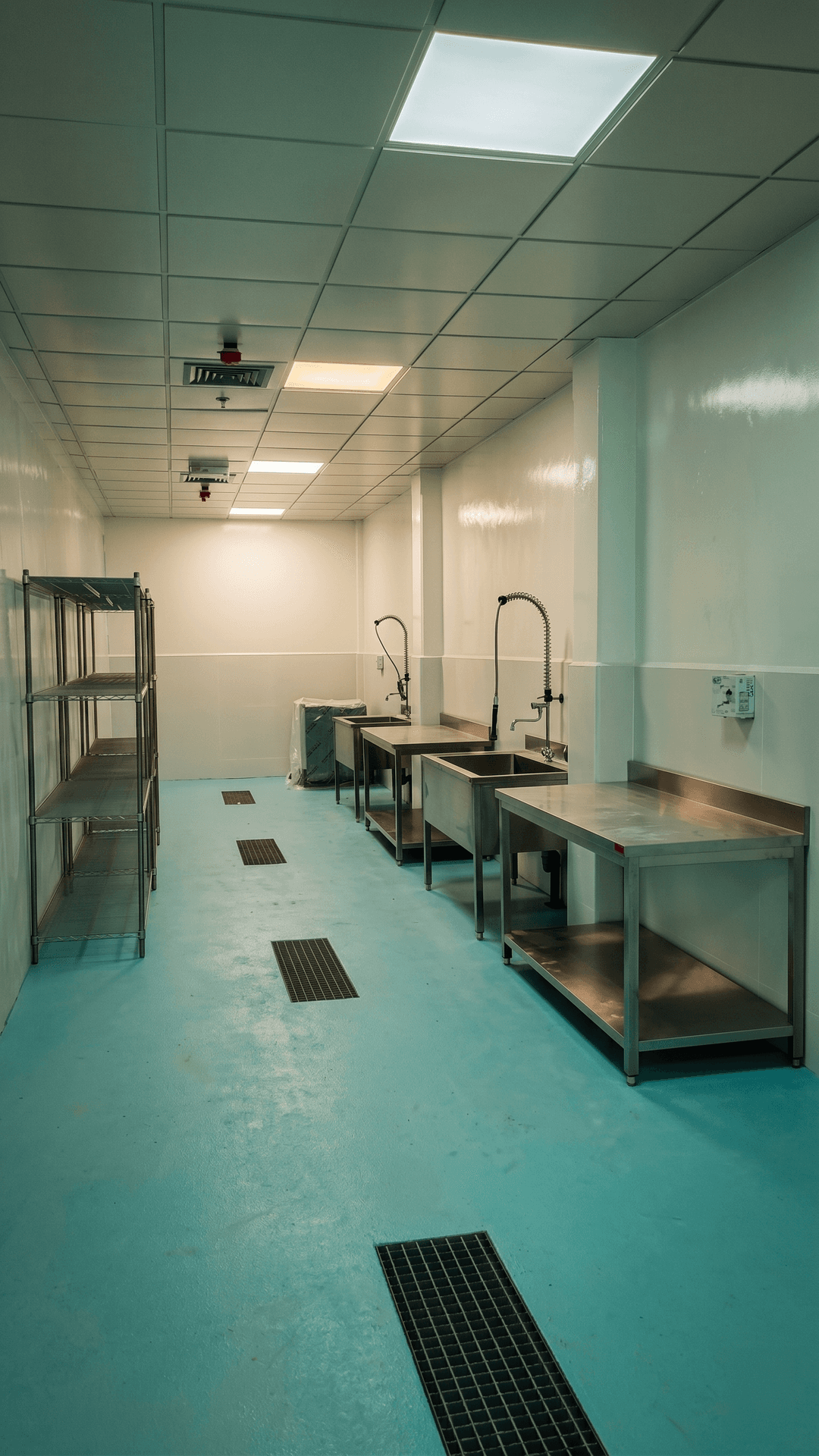
When local fabrication saves the programme (and when import is fine)
Not every bench needs to be custom — but interfaces, odd columns, and last-minute MEP shifts are where a local workshop pays off.
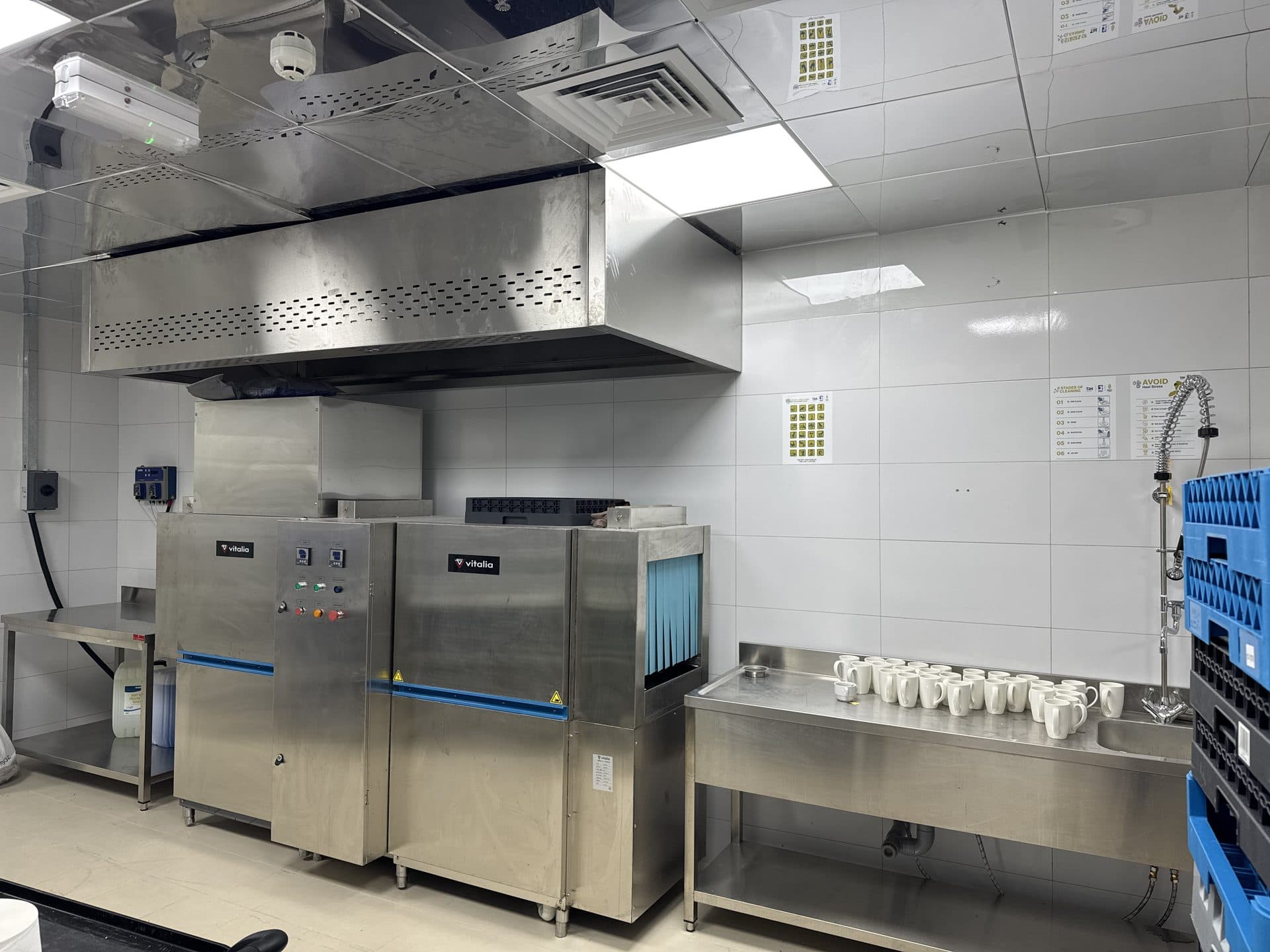
The question of whether to import stainless steel fabrication or produce it locally comes up on almost every kitchen project. The answer depends on three factors: freeze risk, lead time, and dimensional tolerance.
Imported fabrication — benches, shelving, sinks, and hoods manufactured overseas — works well when the design is frozen early, dimensions are stable, and there is enough lead time to accommodate production, shipping, and customs. For standardised items like modular shelving or pre-configured bench units, import is often the right choice.
Where local fabrication wins
The real value of a local workshop emerges when conditions are less predictable — which, on most commercial construction sites, is most of the time. Walls move. Columns appear in unexpected places. MEP rough-ins end up 50 millimetres from where the drawing said they would be. In these situations, having a fabrication facility 30 minutes from the site, staffed by people who can visit, measure, and adjust, is the difference between staying on programme and waiting six weeks for a revised import shipment.
We see this most often with three types of items. First, kitchen hoods and exhaust plenums. These are large, shape-critical pieces that must fit precisely between structural beams, ductwork, and ceiling grids. A 20-millimetre error on an imported hood can mean weeks of delay while a replacement is fabricated and shipped.
Second, pass counters and chef's tables. These are the interface between kitchen and restaurant, often with specific height requirements, heat lamp cutouts, and service shelf configurations that change during fit-out. A local workshop can turn these around in days.
Third, custom sinks and prep stations that need to accommodate existing plumbing positions. If the drain is not where the drawing says it is, a locally fabricated sink can be adjusted before installation. An imported one cannot.
The decision framework
We use a simple decision tree with our clients. If the item is standard, the design is frozen, and the lead time allows it — import. If the item is custom, interfaces with other trades, or the design is still subject to change — fabricate locally. If there is any doubt, fabricate locally, because the cost of rework on an imported item (return shipping, re-manufacture, customs again) is almost always higher than the modest premium for local production.
A practical example
On a recent hotel project, we imported the bulk of the equipment — combi ovens, fryers, refrigeration units — because those items are manufactured to standard dimensions and the lead time worked. But the 14 metres of custom stainless countertop for the main kitchen pass, the three bespoke prep sinks, and the two exhaust hoods were all fabricated in our Mussafah workshop. When the MEP contractor shifted a sprinkler head by 80 millimetres (discovered during the ceiling close), we adjusted the hood design and had the revised piece on site within five days. An overseas fabricator would have needed six to eight weeks.
The rule of thumb: import for efficiency, fabricate locally for resilience. On most projects, you need both.