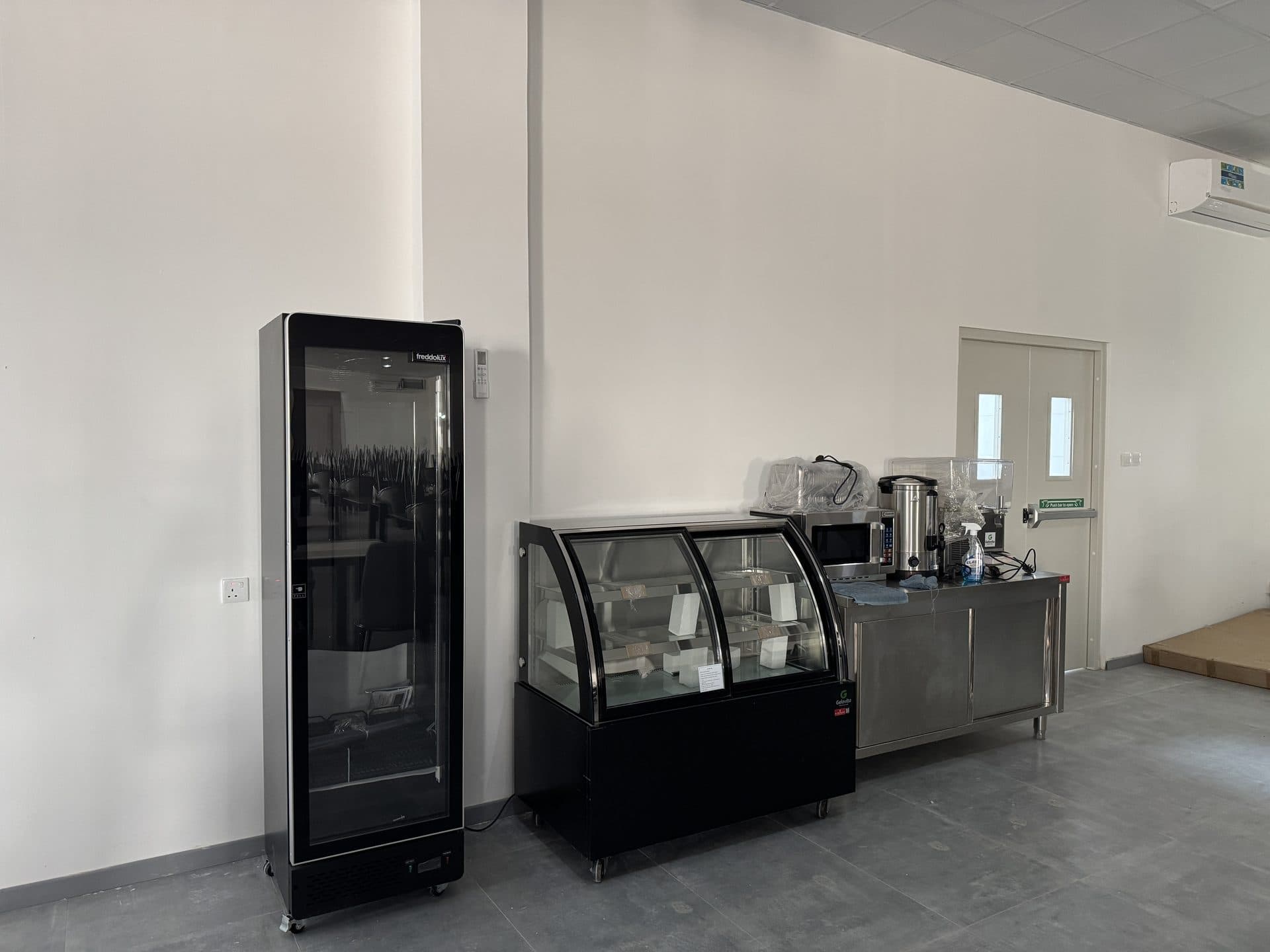
Supermarket display layout — balancing customer experience with energy costs
Open chillers sell more, but they cost more to run. How to design a display layout that works for the customer and the electricity bill.
Walk into any well-designed supermarket and the refrigerated display cases do two jobs at once: they keep food safe, and they make it look appealing. The challenge for operators is that these two goals often pull in opposite directions. Open multi-deck chillers are great for impulse purchases and easy access, but they consume significantly more energy than closed-door units.
In the Gulf, where ambient temperatures push 45 degrees Celsius for months at a time, this trade-off is even more pronounced. The refrigeration plant has to work harder, the energy bill climbs, and the compressor life shortens. Getting the display layout right is one of the most important decisions in a supermarket equipment scope.
Open versus closed — where each makes sense
Open multi-deck chillers are best suited for high-traffic categories where customers browse frequently: dairy, ready meals, fresh juices, and deli items. The lack of a door reduces friction and increases dwell time. But the energy cost is real — an open chiller in a Gulf supermarket can consume 40 to 60 per cent more energy than an equivalent closed unit.
Glass-door reach-in cases work well for categories where the customer knows what they want: bottled beverages, frozen foods, ice cream. The door creates a thermal barrier that dramatically reduces energy consumption and also reduces the load on the store's air conditioning system.
Our recommendation for most Gulf supermarkets is a hybrid approach: open cases for the fresh perimeter (dairy, deli, bakery, produce) where presentation drives sales, and glass-door cases for the centre aisles and frozen sections where efficiency matters more.
Night blinds and LED lighting
For open cases that run overnight, night blinds are a simple and effective energy-saving measure. When the store is closed, the blinds reduce cold air spillage by up to 30 per cent. We specify night blinds with automatic timers linked to the store's operating hours.
LED case lighting has largely replaced fluorescent tubes, and for good reason. LEDs produce less heat inside the case (reducing the cooling load), last longer, and provide better colour rendering for fresh produce. The upfront cost has come down significantly, and the payback period is typically under two years.
Compressor plant sizing
The display layout directly determines the refrigeration plant capacity. More open cases mean higher heat extraction demand. We size the compressor plant to handle the peak summer ambient temperature in the store's location — not the annual average. This prevents the common problem of a plant that copes well in January but struggles in August.
We also factor in redundancy. If one compressor in a rack goes down, the remaining units should be able to maintain safe temperatures across all cases until the repair is completed. This is particularly important for stores with large fresh food departments.
The customer flow connection
Display layout is not just an energy question — it is a retail design question. Where the customer enters, how they move through the store, and what they see first all influence purchasing behaviour. We work with the operator's merchandising team to align the equipment layout with the customer journey, so the display cases are positioned where they have the most commercial impact.
If you are planning a new supermarket or refreshing an existing store, the display layout is where equipment meets retail strategy. Getting it right saves energy, drives sales, and keeps food safe — all at the same time.