
Proofing, ovens, and cooling — balancing a bakery line for consistent output
Bottlenecks often hide between proofer and deck oven. Aligning timing, floor space, and staff movement for artisan and scaled production.
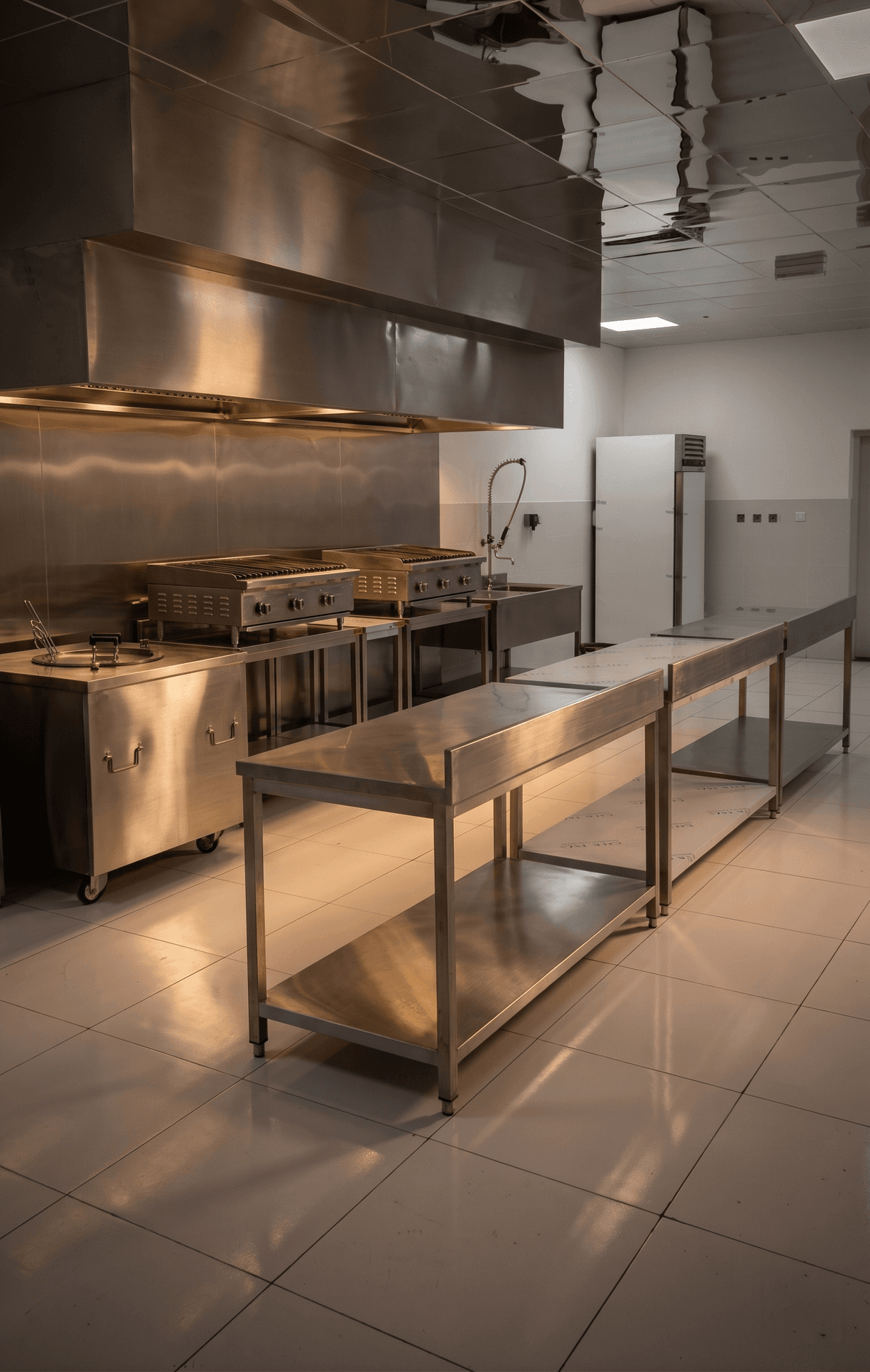
A bakery line that looks balanced on a floor plan can still create queues at the oven door if the proofing cycles and bake times are not properly aligned. This is one of the most common issues we encounter when reviewing bakery layouts — the equipment is individually well-specified, but the system does not flow.
The core challenge is that dough has its own schedule. A baguette proofs for a different duration than a brioche. A sourdough needs a long, slow fermentation. A croissant has multiple fold-and-rest cycles. The bakery line has to accommodate all of these rhythms without creating bottlenecks.
Understanding the proofing-to-oven relationship
The most critical handoff in any bakery is from proofer to oven. If the proofer releases more dough than the oven can bake in the same window, trays stack up on trolleys, over-proof, and the product quality drops. If the oven finishes faster than the proofer, it sits idle — wasting energy and time.
We map this relationship for each product in the baker's range. For a typical artisan bakery producing sourdough, baguettes, and pastries, the proofing times might range from 45 minutes to several hours. The oven bake times are shorter — 20 to 40 minutes — so the oven can usually outpace a single proofer. The question is how to stagger the loading so the oven runs continuously.
Retarder-proofers change the equation
For many bakeries, especially those with early-morning production schedules, retarder-proofers are transformative. The baker shapes dough in the afternoon, loads the retarder, and programmes it to begin proofing at 3am. By the time the baker arrives at 5am, the first batch is ready for the oven.
This shifts the bottleneck from proofing to baking — which is a much easier problem to solve with a second oven or longer shifts. We specify retarder-proofers with programmable multi-step cycles, so the fermentation profile matches each dough type.
Cooling and packing — the forgotten stages
After baking, bread needs to cool before it can be sliced, packed, or displayed. If there is no dedicated cooling area, hot bread ends up on the packing table, creating condensation inside the packaging and shortening shelf life. For production bakeries, we include cooling racks or conveyors in the layout. For smaller operations, a well-ventilated staging area is usually sufficient.
Packaging is another stage that is often squeezed into leftover space. If the bakery supplies retail outlets or delivers wholesale, the packing line needs to be designed with the same care as the production line — clear flow, adequate bench space, and proximity to the dispatch area.
Floor space and staff movement
A bakery layout should allow the baker to move forward through the space: mixing at one end, shaping and proofing in the middle, baking and cooling at the other end. Doubling back wastes time, creates congestion, and increases the risk of raw and finished products crossing paths.
We draw workflow diagrams before we draw equipment plans. This ensures the layout serves the baker's process — not the other way around.
If you are planning a bakery fit-out or expanding an existing production space, the place to start is the product list and daily output target. From there, the line balance determines the equipment, not the other way around.
Related articles
Factors to consider before investing in laundry equipment
Capacity, system design, MEP, and after-sales support matter more than a spec-sheet comparison. How to size a laundry investment that still works in year five.
Read article
From linen weight to machine line — modelling laundry throughput
Hotels and hospitals rarely have a single peak number. Building scenarios for occupancy, linen mix, and growth before sizing washers and ironers.
Read article
On-premise hotel laundry versus outsourcing — making the right call
The decision to build an on-premise laundry or outsource to a commercial plant depends on more than just cost per kilogram.
Read article