
Commercial kitchen design trends in 2026
Smarter layouts, MEP coordination from day one, and equipment that can flex with the menu — what operators are actually asking for this year.
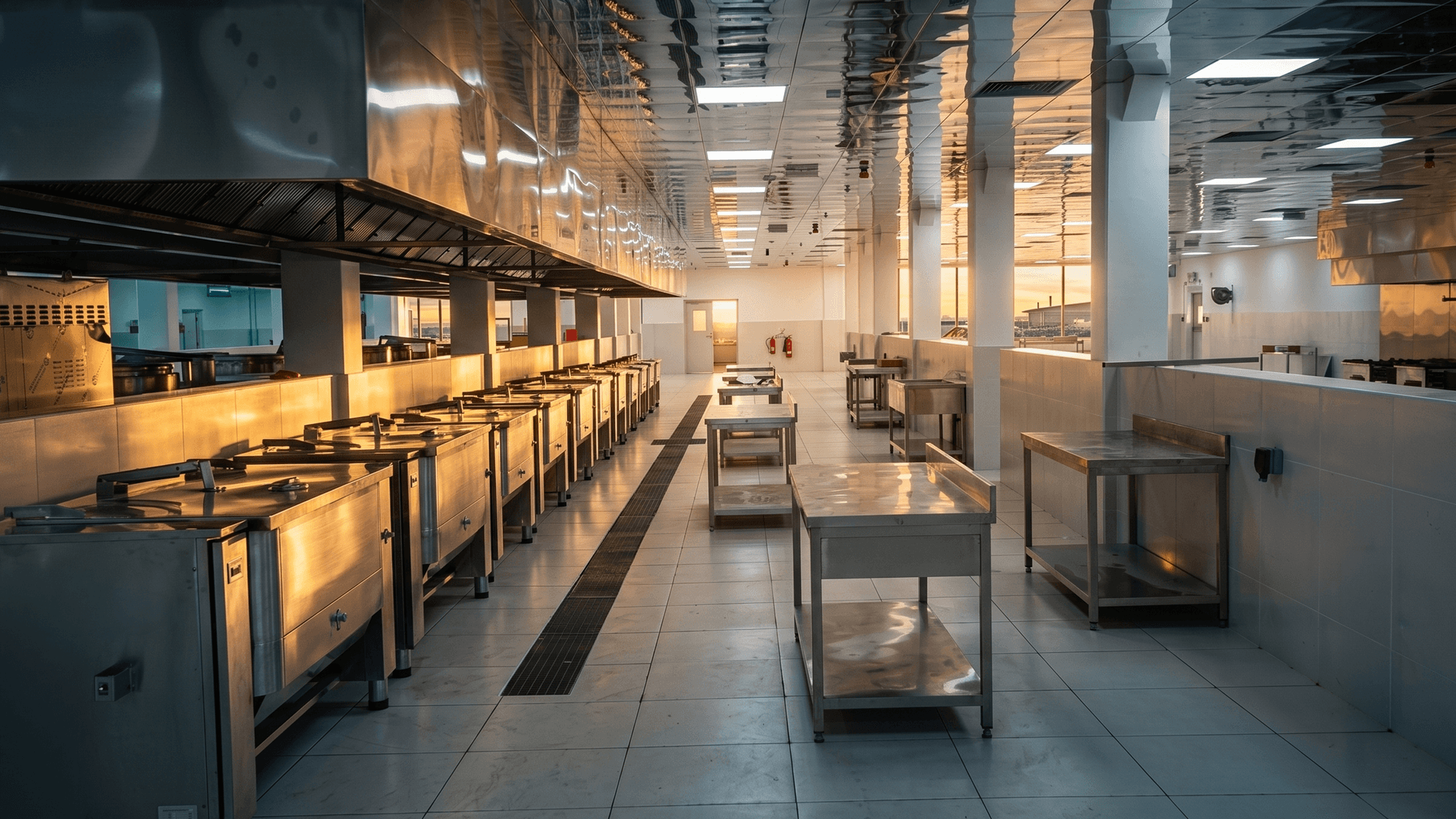
The foodservice industry is evolving rapidly, and so are commercial kitchens. In 2026, businesses are focusing on smarter layouts, sustainable operations, and technology-driven solutions that improve efficiency. Whether it is a restaurant, hotel, cloud kitchen, or catering facility, commercial kitchen design is no longer just about placing equipment — it is about creating a workspace that performs at its best.
Design around workflow, not the floor plate
One of the biggest kitchen trends this year is designing around workflow. Every section, from food preparation and cooking to washing and storage, is planned to reduce unnecessary movement and increase productivity. A well-designed layout helps teams work faster while maintaining food safety and hygiene standards.
We start every project by mapping how food, staff, and waste actually move through the space. When that sequence is clear, equipment placement, aisle widths, and storage positions follow. When it is not, even expensive kit sits in the wrong place and the kitchen fights itself during service.
MEP coordination is part of the design, not a later trade
Another important shift is the growing focus on kitchen MEP coordination. Mechanical, electrical, and plumbing systems play a critical role in whether a commercial kitchen works. Proper coordination ensures that ventilation, drainage, gas lines, power supply, and water connections are integrated into the design from the beginning. That reduces installation issues, prevents costly changes, and keeps projects on schedule.
On sites where MEP is left until after the equipment schedule is frozen, we still see drains in the wrong place, extract that does not match the cooking line, and electrical supplies that cannot cover peak load. Closing those gaps at design stage is cheaper than fixing them on site.
One accountable team from supply to commissioning
Businesses are also looking for partners who can manage kitchen equipment supply and installation as part of a complete project solution. Working with a single provider improves communication, ensures equipment compatibility, and simplifies the transition from design to operation. It also helps businesses open faster with fewer delays during commissioning.
Equipment that earns its keep
Technology continues to shape modern kitchens in 2026. Energy-efficient equipment, smart monitoring systems, and modular workstations help businesses reduce operating costs while improving performance. Flexible layouts also allow kitchens to adapt to changing menus and increasing production demands, which makes them a smarter investment for long-term growth.
At Al Rumooz, every project begins with understanding the client's operational needs. From concept development and detailed planning to fabrication, installation, and commissioning, every stage is managed so the kitchen is efficient, durable, and built for how the operation will actually run — not only for opening day.
As commercial kitchens continue to evolve, investing in the right design is more important than ever. By following these trends and working through workflow, MEP, and equipment together, businesses can create kitchens that improve productivity, support growth, and remain ready for the demands of tomorrow.
Related articles
Cloud kitchen vs central kitchen in the UAE — what is actually different
Both run without a dining room. The workflow, storage, and food-safety requirements are not the same — and choosing the wrong layout is expensive to undo.
Read article
Setting up a pastry kitchen in the UAE: equipment, layout, and fit-out sequencing
Buy the ovens last. Production flow, services, and fit-out sequence decide whether a pastry kitchen keeps up — or fights itself every morning.
Read article
MEP coordination — why kitchens fail at the interface, not the equipment
The most common kitchen problems are not equipment failures. They are coordination gaps between the kitchen consultant, MEP engineer, and contractor.
Read article